January 23, 2026 | personal injury Claims
What Is Negligence? A Practical Guide to Your Right to Compensation

Book a FREE Consultation
Tell us what happened
We’re here to help.
Table of Contents
Negligence is a legal concept that allows injured people in British Columbia to seek compensation when someone else’s careless conduct causes them harm.
In many civil lawsuits, slip and fall or medical negligence claims, the central issue is whether a person or business failed to use the care that a reasonable person would have in similar circumstances.
In simple terms, negligence means not taking reasonable care, and that failure leads to injury, even if there was no intent to cause harm.
Most negligence cases arise from everyday situations where foreseeable harm could have been prevented with proper precautions.
For example, a property owner who ignores a known safety hazard, a business that fails to maintain safe premises, or a recreational soccer player who acts without reasonable care may be considered negligent if their actions or inaction result in someone being injured.
In British Columbia, the Negligence Act serves as the legal foundation for most personal injury claims.
Understanding what negligence means, how it is proven, and what kinds of losses it can cover can help you determine whether you may have a valid personal injury claim.
Negligence Can Create an Unreasonable Risk of Harm
At its core, negligence is about creating an “objectively unreasonable risk of harm”. Canadian courts, including the Supreme Court of Canada, have used this standard to assess whether someone’s conduct fell below what the law considers acceptable.
Negligence can arise from actions or inaction. It may involve doing something unsafe or failing to do something that a reasonable person would have done.
Most civil lawsuits in British Columbia are built on this concept.
A negligence claim typically alleges that one party’s careless conduct created an unreasonable risk, and that this risk ultimately caused another person to be injured.
Consider a common example. You are shopping at a grocery store and slip on a puddle of liquid in one of the aisles. You injure your knee, ankle, and lower back. If store staff were aware of the spill but failed to clean it up or warn customers within a reasonable time, the issue is not simply that an accident occurred.
The question becomes whether the store allowed an unreasonable risk of harm to remain unaddressed. To determine whether conduct rises to the level of negligence, courts do not rely on a single factor.
Instead, they assess a series of legal requirements that must be proven in every negligence claim.
The Elements of Negligence in British Columbia
In this scenario, you may be eligible to file a lawsuit based on negligence if it can be proven that the accident was caused by a dangerous condition that was known about, but not corrected.
While these types of claims may seem cut-and-dry, they are notoriously difficult to prove.
In order to demonstrate that negligence occurred, you’ll need the skills of a qualified trip and fall lawyer who can assess the circumstances and identify if the following criteria were met:
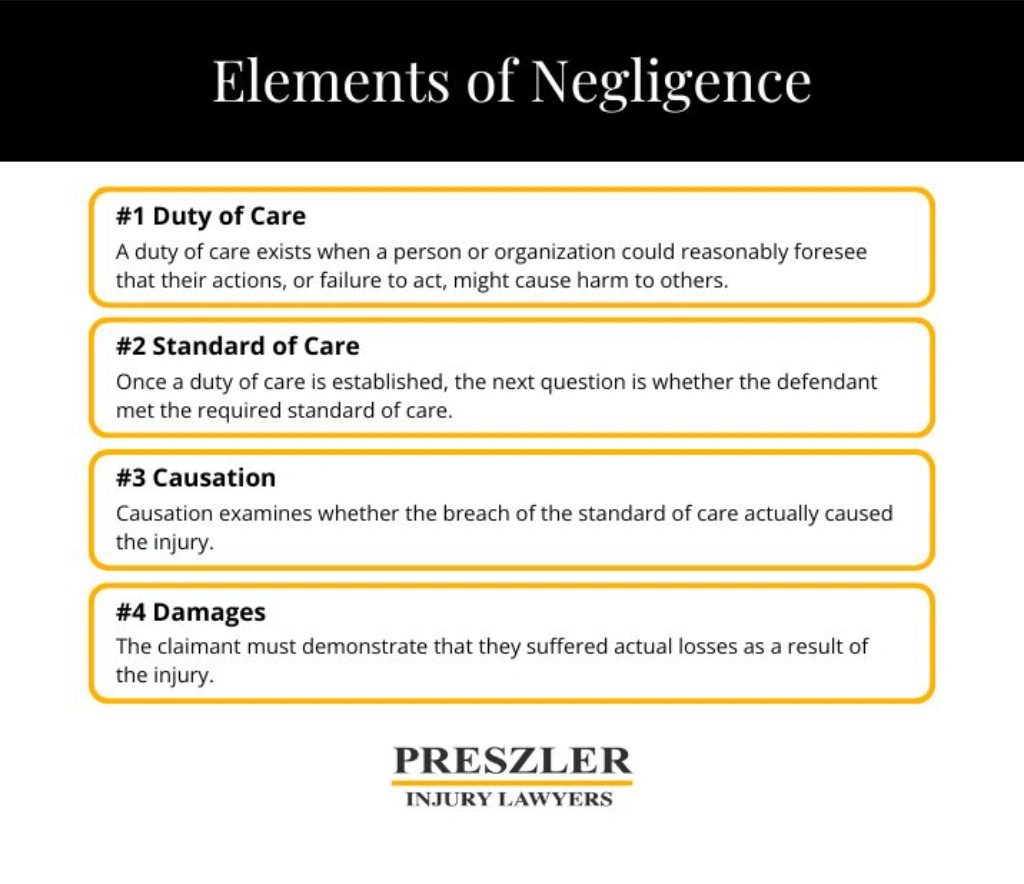
Duty of Care
A duty of care exists when a person or organization could reasonably foresee that their actions, or failure to act, might cause harm to others.
Standard of Care (Breach of Duty)
Once a duty of care is established, the next question is whether the defendant met the required standard of care.
Courts consider whether a reasonable person in the same situation would have acted differently. Failing to repair a known hazard or ignoring safety risks may constitute a breach of the standard of care.
Causation
Causation examines whether the breach of the standard of care actually caused the injury.
The injured person must show that the harm would not have occurred but for the defendant’s actions or omissions.
Damages
Finally, the claimant must demonstrate that they suffered actual losses as a result of the injury.
These may include physical injuries, medical expenses, lost income, or other measurable financial and personal impacts. Without provable damages, a negligence claim cannot succeed, even if carelessness is established.
With decades of experience representing personal injury victims, Preszler Injury Lawyers has a proven track record of obtaining fair settlements in BC.
It takes knowledge and commitment to secure the evidence necessary to prove negligence occurred, and the unsafe conditions caused your injuries and subsequent financial losses.
For example, in Tommy v. 7‑Eleven Canada Inc, Preszler Injury Lawyers proved that a neglected pothole in a convenience store parking lot caused our client’s injuries and long‑term mobility problems, leading to a court award of more than $900,000 in damages.
What Do the Courts Consider “Reasonable”?
In negligence cases, courts do not assess conduct based on hindsight or perfection. Instead, they apply the standard of the reasonable person, an idea that reflects someone who exercises sound judgment and acts in a careful and sensible manner in similar circumstances.
In British Columbia, courts consider several factors when determining whether conduct meets this standard, including:
- Foreseeability: Could the defendant reasonably have foreseen that their actions, or failure to act, might cause harm to someone else?
- Burden of prevention: Would preventing the harm have required little or no effort, cost, or inconvenience?
- Seriousness of the risk: Was the potential injury significant enough that reasonable precautions should have been taken?
These factors help courts balance everyday human behaviour against legal responsibility.
Not every accident results from negligence. The key question is whether a reasonable person, facing the same situation, would have taken steps to reduce or eliminate the risk.
In Tanaka v. London Drugs Limited, for example, the court found the store was not negligent for a sudden, random assault by another customer because there was no prior warning, no pattern of similar incidents, and no practical security measure that would have prevented the attack without imposing an unreasonable burden.
Can You Still Claim Compensation If You Were Partly at Fault?
In some accident cases, more than one person is at fault.
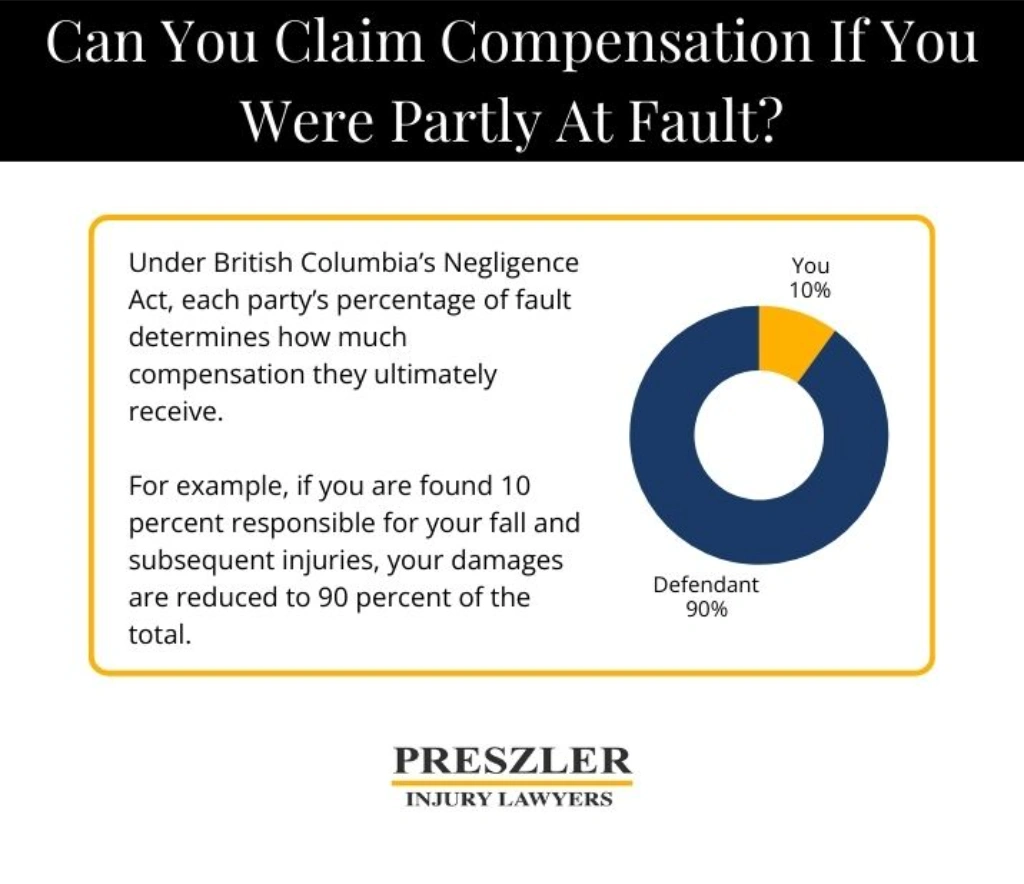
Under British Columbia’s Negligence Act, each party’s percentage of fault determines how much compensation they ultimately receive.
Let’s take this example: if you are found 10 percent responsible for your fall and injuries, your damages are reduced to 90 percent of the total.
Even if your own actions contributed to a fall on someone else’s property, you may still qualify for compensation under the Occupiers Liability Act, which requires owners and occupiers to keep their premises reasonably safe for visitors. Cluttered aisles, torn carpeting, and defective stairs are all hazards that can foreseeably cause harm when not properly maintained.
When negligent maintenance or a failure to address known dangers leads to serious injuries, you may have a legal remedy.
Put Our Experience To Work For You
If you were injured and are unsure how negligence, shared fault, or the Negligence Act may apply to your situation, a personal injury lawyer can review the specific circumstances of your claim and explain how these factors could affect your potential compensation.
At Preszler Injury Lawyers, consultations are free and focused on helping you understand your legal options. If you would like to speak with a lawyer, you can call 1-844-373-8202 or contact us online to book a free consultation.
Written by Derek V. Abreu
Personal Injury Lawyer
Lawyer Derek Abreu’s practice includes institutional abuse claims, long-term disability matters, premises liability disputes, and catastrophic injury cases involving brain, spinal cord, and psychiatric conditions.
More personal injury Topics
Here’s more information on personal injury related topics that we think you might find helpful.

personal injury
|
February 25, 2026
10 Tips To Help You Choose The Best Personal Injury Lawyer In BC
Choosing a personal injury lawyer in Vancouver or anywhere in BC is one of the most important decisions you can make after suffering a serious…

personal injury
|
May 26, 2025
Mental Health Still Often Demands Medical Proof to Claim in British Columbia
Mental health has long been a critical issue in Canada, affecting millions of individuals across the country. Despite growing awareness, stigma and barriers to treatment…

personal injury
|
May 1, 2023
How Can Social Media Impact Your Insurance Claim?
In the digital age, social media has become a powerful tool. It is commonplace for an individual to be spread across multiple social media platforms,…
Speak With Our
Legal Team for FREE
Find Out if You Have a Case in Under 5 Minutes
Speak to a Lawyer Now!
We’re here to help.