March 19, 2026 | personal injury Claims
Damages in British Columbia Tort Claims: What You Need to Know

Book a FREE Consultation
Tell us what happened
We’re here to help.
Table of Contents
When someone is injured because of another person’s negligence in British Columbia, the law may allow them to seek compensation through what is known as a tort claim. These claims can arise in many different situations, including slip and fall accidents, medical malpractice, dog bites, defective products, unsafe premises, and, in some circumstances, motor vehicle accidents.
The compensation available through a tort claim is referred to as damages. Damages are financial awards intended to compensate an injured person for the losses they have suffered as a result of their injuries. Understanding how these damages work is an important part of pursuing fair compensation after an accident caused by someone else’s negligence.
If you have suffered an injury, you may wish to speak with a personal injury lawyer about your legal options. Preszler Injury Lawyers offers a free consultation, where you can discuss your situation and learn more about the next steps that may be available.
This article explains the main types of damages available in British Columbia tort claims and how courts evaluate these losses when determining compensation.
What Is a Tort Claim in British Columbia?
As the introduction suggests, a tort claim is a legal claim for compensation when someone suffers harm because of another person’s wrongful act or negligence. In these cases, the injured person may seek damages from the party responsible for causing the injury.
Torts can be intentional or unintentional.
Intentional torts occur when a person deliberately causes harm to someone else. Examples include actions such as assault, battery, or intentional infliction of emotional distress.
Most personal injury claims, however, involve unintentional torts, which occur when someone’s careless conduct causes injury. These situations typically arise when a person or organization fails to meet the level of care expected by the law in a given situation.
Common examples of unintentional tort claims in British Columbia include:
- Slip, trip and-fall incidents
- Medical malpractice
- Dog bites or animal attacks
- Injuries caused by defective or unsafe products
- Accidents caused by unsafe property conditions or negligent security
Motor vehicle accidents were historically one of the most common types of tort claims in British Columbia. However, as of May 1, 2021, most car accident injuries are handled through ICBC’s Enhanced Care system, which generally replaces traditional lawsuits with a no-fault benefits model.
In situations where a tort claim is available, the injured person may be able to pursue a tort claim to recover compensation for the losses caused by the injury.
These losses are known as damages, which may include financial losses such as medical expenses and lost income, as well as non-financial harms like pain, suffering, and loss of enjoyment of life.
The specific damages available in a tort claim depend on the nature of the injury, the available evidence, and how the injury has affected the person’s life.
Types of Damages in British Columbia Tort Claims
In a tort claim, damages are intended to compensate an injured person for the losses they have suffered because of someone else’s negligence. In general, the goal of damages in British Columbia is to place the injured person, as much as possible, in the position they would have been in if the injury had never occurred.
Because injuries can affect people in many different ways, the law recognizes several types of damages to address the financial, physical, and emotional consequences of an injury.
These damages are typically grouped into two main categories:
- Pecuniary damages
- Non-pecuniary damages
Each category addresses a different type of loss.
Pecuniary Damages
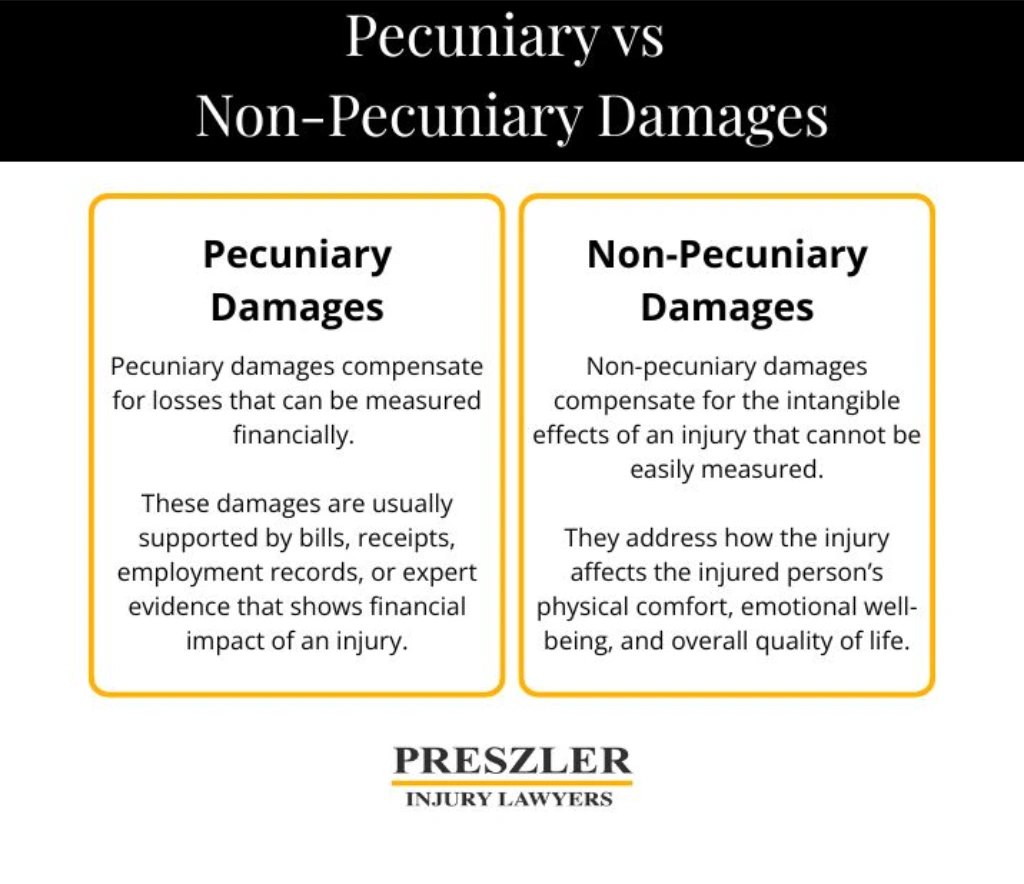
Pecuniary damages compensate for losses that can be measured financially. These damages are usually supported by bills, receipts, employment records, or expert evidence that shows the financial impact of an injury.
Common examples of pecuniary damages include:
- Past and future medical expenses
- Rehabilitation and physiotherapy costs
- Psychological counselling or therapy
- Prescription medications
- Mobility aids or medical equipment
- Transportation costs for medical treatment
- Home modifications required after an injury
- Paid caregiving or attendant care
- Past lost wages
- Loss of future earning capacity
- Other out-of-pocket expenses caused by the injury
Proving past pecuniary losses is often straightforward when the injured person keeps records of their expenses and income losses.
Future losses, however, can be more complex.
Courts may rely on medical reports, employment records, tax documents, and expert evidence to estimate future income loss or the long-term cost of care required because of the injury.
Non-Pecuniary Damages
Non-pecuniary damages compensate for the intangible effects of an injury that cannot be easily measured in financial terms. These damages address how the injury affects the injured person’s physical comfort, emotional well-being, and overall quality of life.
The most widely known example of non-pecuniary damages is compensation for pain and suffering.
However, these damages can also include compensation for:
- Psychological injuries such as anxiety, depression, or post-traumatic stress
Disfigurement or permanent scarring - Loss of expectation of life, where an injury reduces a person’s life expectancy
- Loss of amenities of life, meaning the inability to participate in activities, hobbies, or experiences that were previously part of the person’s life
- Impacts on family relationships, social life, and daily functioning
When determining the amount of non-pecuniary damages, courts in British Columbia often review awards from previous cases involving similar injuries.
These past decisions help guide the court in determining a fair amount of compensation and in adjusting older awards to reflect inflation over time.
Limits on Non-Pecuniary Damages in British Columbia
The cap on non-pecuniary damages does not apply to assault or sexual assault claims. When people hear about “pain and suffering” damages, they sometimes think of the extremely large awards that are occasionally reported in the United States. In Canada, however, the Supreme Court of Canada established an upper limit on non-pecuniary damages decades ago.
In the late 1970s, the Supreme Court decided a trilogy of cases that created a cap on damages for pain and suffering and other non-pecuniary losses. The Court explained that losses such as pain, suffering, and loss of enjoyment of life cannot be measured in the same way as financial losses. Because there is no true market value for these kinds of harms, the Court introduced a policy-based limit to ensure that awards remained fair and consistent nationwide.
The Supreme Court set the cap at $100,000 in 1978, and courts now generally understand the inflation‑adjusted upper range for catastrophic injuries to be in the high $400,000‑dollar range, with the precise figure varying over time as inflation is taken into account.
It is important to note that only the most catastrophic injuries approach the upper limit.
These are typically cases involving extremely severe and life-altering injuries, such as paralysis or profound brain injuries.
In most personal injury cases in British Columbia, non-pecuniary damages are awarded at amounts well below the cap, depending on the severity of the injury and how it affects the injured person’s life.
Because courts assess damages based on the available evidence, the strength of a tort claim often depends on how well the impact of an injury can be documented.
Proving and Documenting Damages in a Tort Claim
In order to recover damages in a British Columbia tort claim, an injured person must provide evidence showing how the injury has affected their life.
Because gathering and presenting this evidence can be complex, it is important to choose a personal injury lawyer with experience handling similar claims and building strong evidentiary records.
At the same time, there are several practical steps injured individuals can take early on that may help demonstrate the full impact of an injury and support a future claim for damages.
#1 Seek prompt medical attention
See a doctor as soon as possible after the incident and follow the treatment recommendations you receive. Medical records often form the foundation of a personal injury claim because they document the diagnosis, treatment, and expected recovery.
#2 Keep detailed treatment and expense records
Track all medical appointments, prescription medications, rehabilitation or therapy sessions, and other out-of-pocket expenses related to your injuries. Receipts, invoices, and treatment summaries help establish the financial cost of the injury.
#3 Document time off work and income loss
Record any days missed from work and note changes to your job, such as reduced hours, modified duties, or loss of employment. Employment letters, pay stubs, and tax documents can be used to demonstrate past and future wage loss.
#4 Record how the injury affects daily life
Keep a journal describing symptoms, limitations, sleep, mood, and pain levels, and note how these changes affect hobbies, household responsibilities, social life, and relationships. Photos, videos, and statements from family members, friends, or co-workers can also help illustrate these day-to-day impacts.
#5 Consider expert evidence in serious cases
In more complex claims, lawyers may work with medical specialists, vocational consultants, and economists to evaluate the long-term effects of an injury. These experts can help estimate future medical and rehabilitation needs, the cost of ongoing care, and any reduction in earning capacity.
Taking the Next Step With Your BC Tort Claim
Damages in British Columbia tort claims are designed to recognize both the financial and personal impact an injury can have on your life.
Because every situation is different, the compensation available will depend on the nature of your injuries, the supporting medical and financial evidence, and how your day-to-day activities and future earning capacity have been affected.
If you are considering a tort claim, a personal injury lawyer can help identify the types of damages that may be available to you and gather the evidence needed to support your case.
Here at Preszler Injury Lawyers, we offer a free consultation, so you can discuss your circumstances, ask questions, and better understand the potential value of your claim before deciding how to move forward.
Call 1-844-373-8202 or contact us online to schedule your free consultation.
Written by Joseph Fearon
Personal Injury Lawyer
Managing partner Joseph Fearon’s work is concentrated on serious injury litigation. He has represented clients in brain injury cases, complex accident claims, matters involving contested liability, and more.
More personal injury Topics
Here’s more information on personal injury related topics that we think you might find helpful.

personal injury
|
February 25, 2026
10 Tips To Help You Choose The Best Personal Injury Lawyer In BC
Choosing a personal injury lawyer in Vancouver or anywhere in BC is one of the most important decisions you can make after suffering a serious…
personal injury
|
January 23, 2026
What Is Negligence? A Practical Guide to Your Right to Compensation
Negligence is a legal concept that allows injured people in British Columbia to seek compensation when someone else’s careless conduct causes them harm. In many…

personal injury
|
May 26, 2025
Mental Health Still Often Demands Medical Proof to Claim in British Columbia
Mental health has long been a critical issue in Canada, affecting millions of individuals across the country. Despite growing awareness, stigma and barriers to treatment…
Speak With Our
Legal Team for FREE
Find Out if You Have a Case in Under 5 Minutes
Speak to a Lawyer Now!
We’re here to help.